From Manufacturing Problems to Medicine Shortages
- Open Hours : Mon-Sat 09:00 - 20:00 Pm IST
riarcompany.2025@gmail.com
February 2, 2026
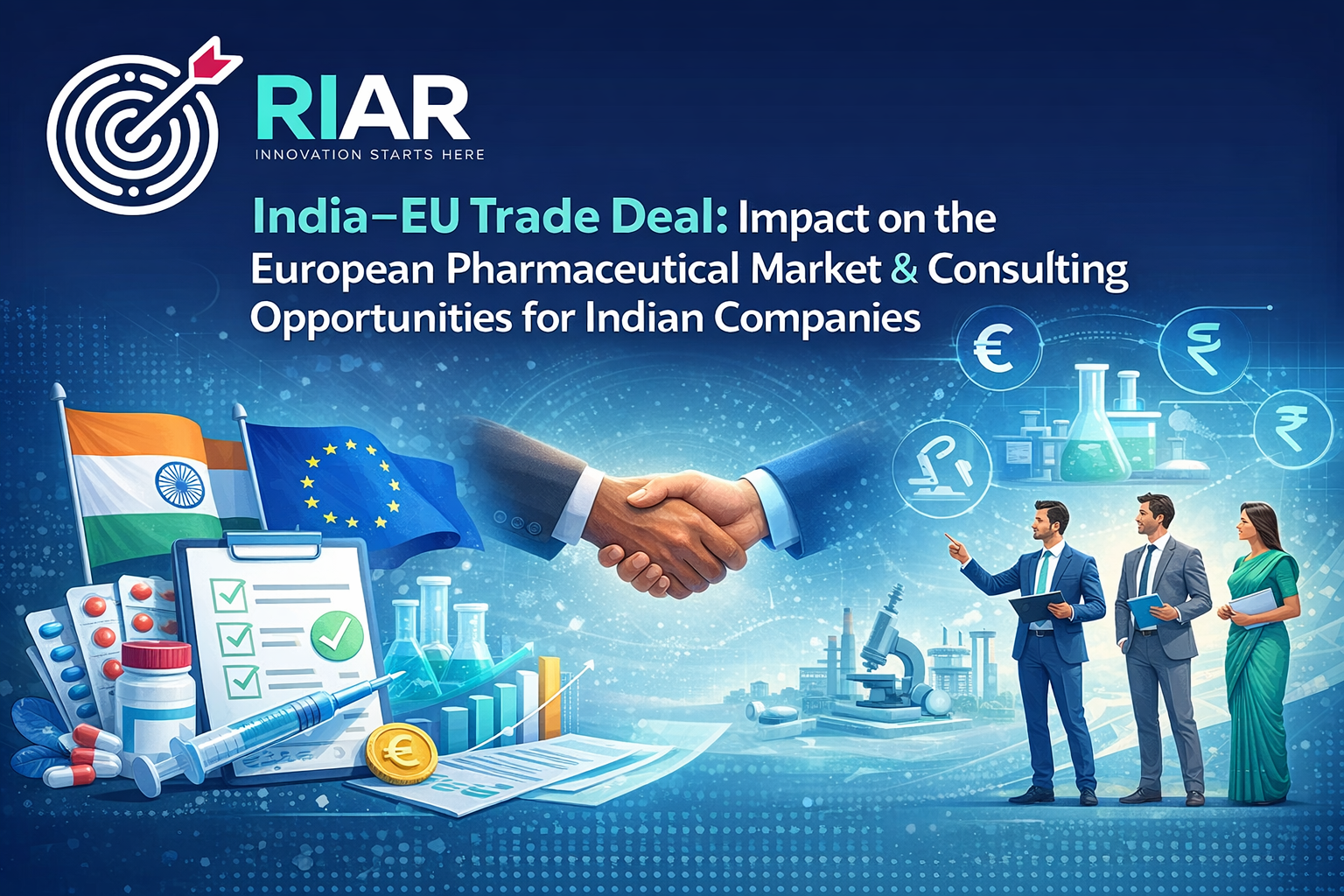
The recently concluded India–EU Free Trade Agreement (FTA)—often described as the “Mother of All Trade Deals”—marks a pivotal shift in economic and strategic relations between India and the European Union. While headlines largely focus on tariffs, exports, and trade volumes, the most transformative impact for the pharmaceutical, biotechnology, and life sciences sector lies in regulatory market access.
For Indian pharma and medtech companies, the agreement improves the commercial attractiveness of entering Europe. However, it simultaneously raises the stakes for regulatory readiness, compliance excellence, and lifecycle governance. As a result, the European pharmaceutical consulting market—particularly services supporting Indian companies—is set for sustained and accelerated growth.
At RIAR Consulting, we view this agreement not merely as a trade enabler, but as a regulatory activity multiplier reshaping how Indian companies approach Europe.
The European Union is one of the largest, most sophisticated, and most tightly regulated healthcare markets globally. It represents strong and consistent demand for:
Generic medicines
Active Pharmaceutical Ingredients (APIs)
Biosimilars
Medical devices and in vitro diagnostics
Indian pharmaceutical companies already play a vital role in global supply chains. However, EU market access is not price-driven. Entry is governed by a complex regulatory ecosystem involving the European Medicines Agency (EMA), national competent authorities, and notified bodies.
To commercialize products in the EU, Indian companies must demonstrate:
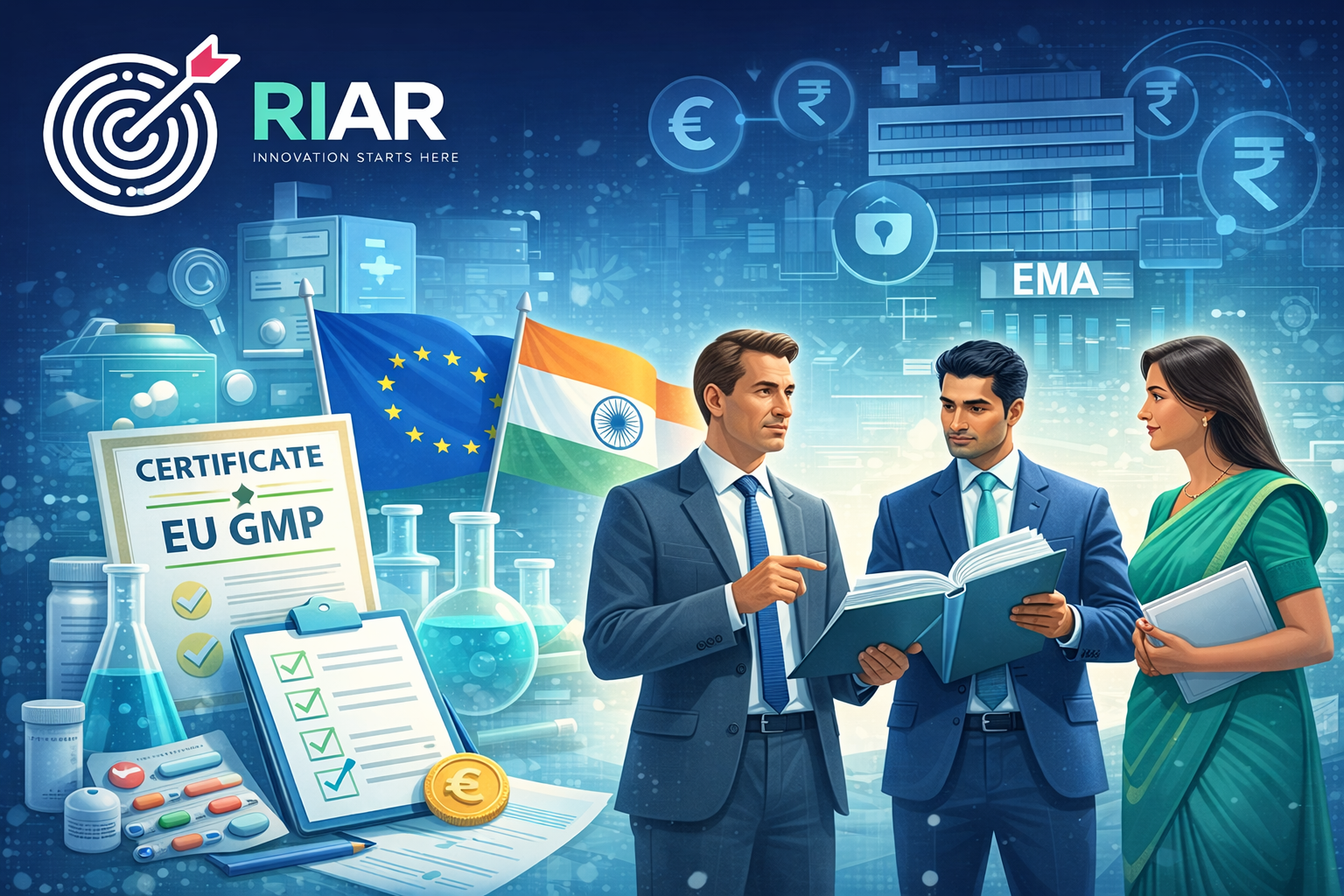
Compliance with EU GMP and GxP standards
High-quality technical, clinical, and regulatory documentation
Robust pharmacovigilance systems and EU legal representation
Ongoing post-approval and lifecycle compliance
This level of regulatory intensity makes specialized pharmaceutical consulting essential—not optional.
Europe’s pharmaceutical regulatory affairs and compliance consulting market is currently valued at approximately USD 3.7–4.0 billion annually, spanning:
Due to regulatory complexity and internal capacity limitations, a significant share of this work is outsourced to specialist consulting firms.
Industry estimates suggest that:
35–40% of EU regulatory consulting demand originates from non-EU companies
Indian companies account for 20–25% of this non-EU demand, particularly in generics, APIs, biosimilars, and medical devices
This translates into a directly addressable consulting opportunity of approximately USD 300–380 million per year, growing at 8–10% CAGR—with growth further accelerated by the India–EU trade agreement.
When expanded to include clinical strategy, market access, HEOR, and medical device consulting, the total opportunity becomes significantly larger.
The India–EU FTA does not dilute regulatory standards. Instead, it materially improves the economic and strategic rationale for Indian companies to pursue EU approvals.
Key implications include:
Improved trade economics and reduced tariff barriers
Greater regulatory cooperation and transparency
Increased confidence among Indian SMEs to pursue first-time EU filings
Stronger EU demand for diversified and resilient pharmaceutical supply chains
The net effect is a higher volume of EU regulatory submissions from Indian manufacturers, particularly in highly regulated product categories.
Indian pharmaceutical and life sciences companies entering Europe typically rely on external consulting support for:
Selection of EU regulatory pathways (Centralised, DCP, MRP)
CTD/eCTD dossier preparation and submission
EU GMP gap analysis and remediation
Clinical and bioequivalence documentation
Pharmacovigilance system setup and QPPV support
Medical device conformity under EU MDR and IVDR
Post-approval lifecycle management and variations
For most Indian organizations—especially first-time EU entrants—outsourcing these functions is driven by risk mitigation, cost efficiency, and execution certainty.
Although EU approvals can provide pan-European access, certain countries serve as strategic anchors:
Germany – Europe’s largest pharmaceutical market with strong generics demand
France – High-volume market with complex pricing and reimbursement systems
Netherlands & Belgium – Regulatory, logistics, and distribution hubs
Italy & Spain – Large public healthcare markets driven by tender systems
Each market introduces additional language, regulatory, and reimbursement complexity, further increasing the demand for specialized consulting expertise.
The consulting ecosystem supporting Indian companies entering Europe includes:
Global CROs and integrated life sciences consultancies
EU-based regulatory, pharmacovigilance, and quality specialists
Medical device and notified body experts
India-origin consultancies with EU presence or strategic partnerships
As EU entry activity accelerates, competition is shifting away from pricing toward regulatory depth, execution quality, and local EU expertise—areas where experienced said firms differentiate.
Despite strong tailwinds, challenges remain:
Stringent EU quality and compliance expectations
Capacity constraints at notified bodies for medical devices
Country-specific pricing and reimbursement hurdles
Increased competition as EU companies gain improved access to India
These constraints reinforce the need for early regulatory strategy, realistic timelines, and expert execution.
The India–EU trade deal is not a one-time boost—it is a structural catalyst.
Over the coming years, Europe is likely to experience:
A sustained rise in EU filings from Indian pharma and medtech companies
Continued growth in regulatory outsourcing and compliance services
Expanding demand for pharmacovigilance, quality, and post-market consulting
For consulting firms operating at the intersection of Indian manufacturing strength and EU regulatory rigor, this represents a long-term, high-value growth opportunity.
The “Mother of All Trade Deals” between India and the European Union marks a defining moment for Indian life sciences companies seeking access to highly regulated global markets. While trade barriers may decline, regulatory expectations remain uncompromising—making pharmaceutical consulting the true enabler of EU market entry.
As more Indian companies turn toward Europe for sustainable growth, the demand for specialized, cross-border regulatory expertise will only intensify. Those who master EU regulations will be the ones who convert trade opportunity into durable market presence.
At RIAR Consulting, we believe the future belongs to organizations that combine global ambition with regulatory excellence.
Riar Consulting supports pharmaceutical, medical device, cosmetic, and emerging healthcare companies with structured regulatory strategies, submission management, and market entry support across major global regulatory authorities.
Stay informed with RIAR Consulting as we share key regulatory updates, compliance insights, and global market access guidance.Your trusted partner for efficient approvals across SFDA, US FDA, EU, UK, and India.
Give Us A Call
Drop Us a Line
Office Location
RIAR Consulting Private Limited
Copyright © 2025. All rights reserved.